UNBOUND 2026: What HubSpot’s Rebranded Flagship Event Means for Growth Teams
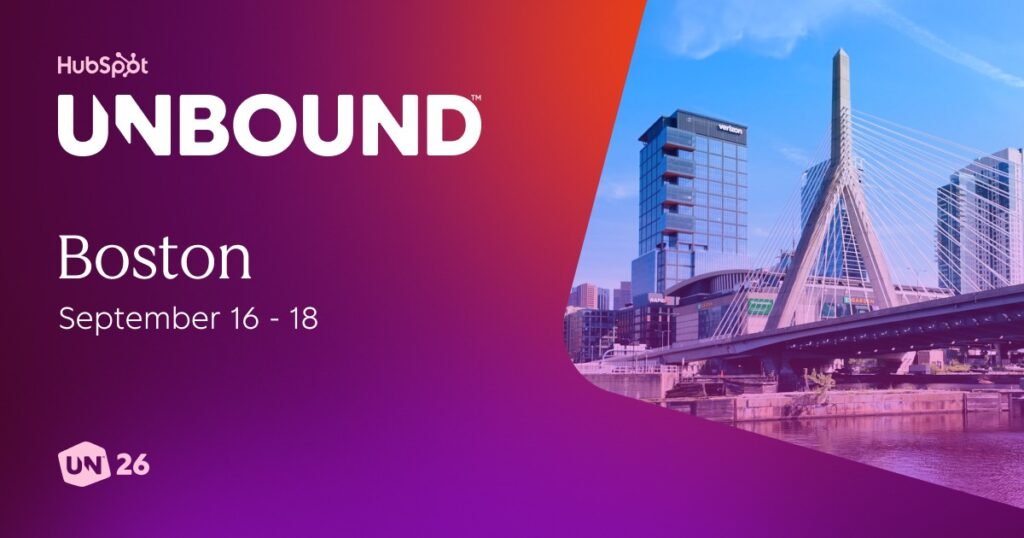
After fifteen years, HubSpot has retired one of the most recognizable brand names in marketing. INBOUND — the conference that gave a whole generation of marketers their vocabulary — is now UNBOUND, and the first edition under the new name runs September 16–18, 2026, in Boston.
For anyone who has spent a career building funnels around content, attraction, and nurture, the name change is not cosmetic. It is HubSpot conceding that the methodology it popularized in 2006 no longer describes how revenue actually gets made in 2026.
Why the rename actually matters
HubSpot’s own framing is blunt: a name rooted in one methodology from the internet era wasn’t enough anymore. The company that once sold marketing software now sells a platform spanning marketing, sales, service, and operations — and the buyers it serves are running go-to-market motions where AI agents draft the outreach, score the pipeline, and route the ticket before a human ever touches the record.
The new positioning leans on three ideas: connected systems, AI-driven execution, and unified teams. Or, as HubSpot puts it, “INBOUND taught the methodology. UNBOUND unleashes what’s next.”
That is marketing copy, obviously. But the underlying shift is real and it is one most RevOps leaders have already felt. The old separation between marketing-qualified and sales-qualified, between the campaign team and the ops team, between the CRM and the content engine, has largely collapsed. What’s left is a single connected system that either compounds or leaks. UNBOUND is HubSpot’s attempt to build an event around that reality rather than around a funnel diagram.
What’s actually on the agenda
The 2026 program is organized around five “Boundless” dimensions rather than traditional job-function tracks:
- Boundless Thinking — keynote conversations and Studio sessions built to challenge assumptions rather than reinforce them
- Boundless Connections — structured networking through Braindate, Exchanges, and community user groups
- Boundless Tools — hands-on product exploration, Academy Labs, and the Builder Bar
- Boundless Creativity — experiential activations and installations
- Boundless Impact — post-event programming designed to keep momentum going after Boston
More than 200 sessions sit underneath that structure, weighted heavily toward AI adoption, go-to-market strategy, and customer experience.
The session most operators will be watching is HubSpot Spotlight, where leadership unveils the year’s platform releases. Spotlight has historically been where the roadmap stops being speculation — the moment you find out whether the workaround you built last spring is about to become a native feature, or whether the integration you were counting on just got deprecated.
The headline speaker list is doing its usual job of pulling a crowd that isn’t purely technical: Tom Brady, Cynthia Erivo, Mel Robbins, comedian and director Aziz Ansari, and NASA astronaut Suni Williams, alongside operators like Zoom CMO Kimberly Storin. It is a lineup built for a general-business audience, which is itself a signal about who HubSpot thinks its buyer is now.
The case for going in person
There is a reasonable argument that you can get the substance of any conference from the recap posts a week later. For most events, that’s true. For a platform event, it usually isn’t — because the valuable part is not the keynote, it’s the twenty minutes with a product manager at the Builder Bar who tells you why a feature behaves the way it does, and the hallway conversation with another agency that solved the migration problem you’ve been circling for a month.
That’s the calculation behind Radish making the trip this year.
“Radish will be at Unbound 2026 because we want to see the newest HubSpot updates and bring back cutting-edge solutions for our clients. It is also the perfect networking event to meet and reconnect with other RevOps and growth-focused professionals.” — Mike O’Mara, Growth Strategist at Radish
It’s a fair summary of why platform events still earn a budget line. Radish works across digital ads, SEO, content, MarTech, web development, and email — which means a HubSpot release note isn’t an abstraction to them, it’s a change to how a dozen client stacks get built next quarter. Turning up in person is the difference between learning about a change and being ready to implement it.
How to get value out of Boston
A few things worth doing if you’re attending:
Pick your Spotlight follow-ups before you land. The announcements will generate more ideas than you can act on. Decide in advance which two systems in your stack you’re actually willing to change this year, and filter everything through that.
Treat Braindate and the user groups as the main event. The sessions are recorded. The people are not. If you run RevOps, the highest-leverage hour of your week is probably a conversation with someone who has already made the mistake you’re about to make.
Book the Academy Labs early. Hands-on capacity is limited and fills fast, and a guided lab beats a demo video every time.
Write your recap on the flight home. The gap between conference energy and Monday reality is where most takeaways die. A one-page memo naming three changes and an owner for each is worth more than forty pages of notes.
UNBOUND 2026 runs September 16–18 in Boston. Tickets for this year have sold out, though HubSpot has opened a presale list for 2027 — worth joining now if the rebrand has your attention.